

How Long will my RV Battery Last?
It’s really simple math!
I get asked all the time about battery usage! The thing is, it’s really just simple math!
Things to know:
- Amps * Volts = Watts (Watts Law)
- DC electricity is from the battery, AC electricity is from Shore Power or a Generator.
- An RV Inverter converts 12v DC electricity to 120V AC electricity.
- Inverters use about 20% of the electricity to do the conversion. Basically, 1A in = 0.8A out to power your device.
- RV Batteries are rated in Amp Hours (Ah) or, how many amps a battery can provide for exactly one hour.
This was in response to someone asking about using a portable space heater instead of the RV Main Propane Heater, but you can substitute and device or combination of devices (coffee pot, crock-pot, hairdryer, phone charger, TV, etc.) in its place.
Let’s look at a few Rating Labels
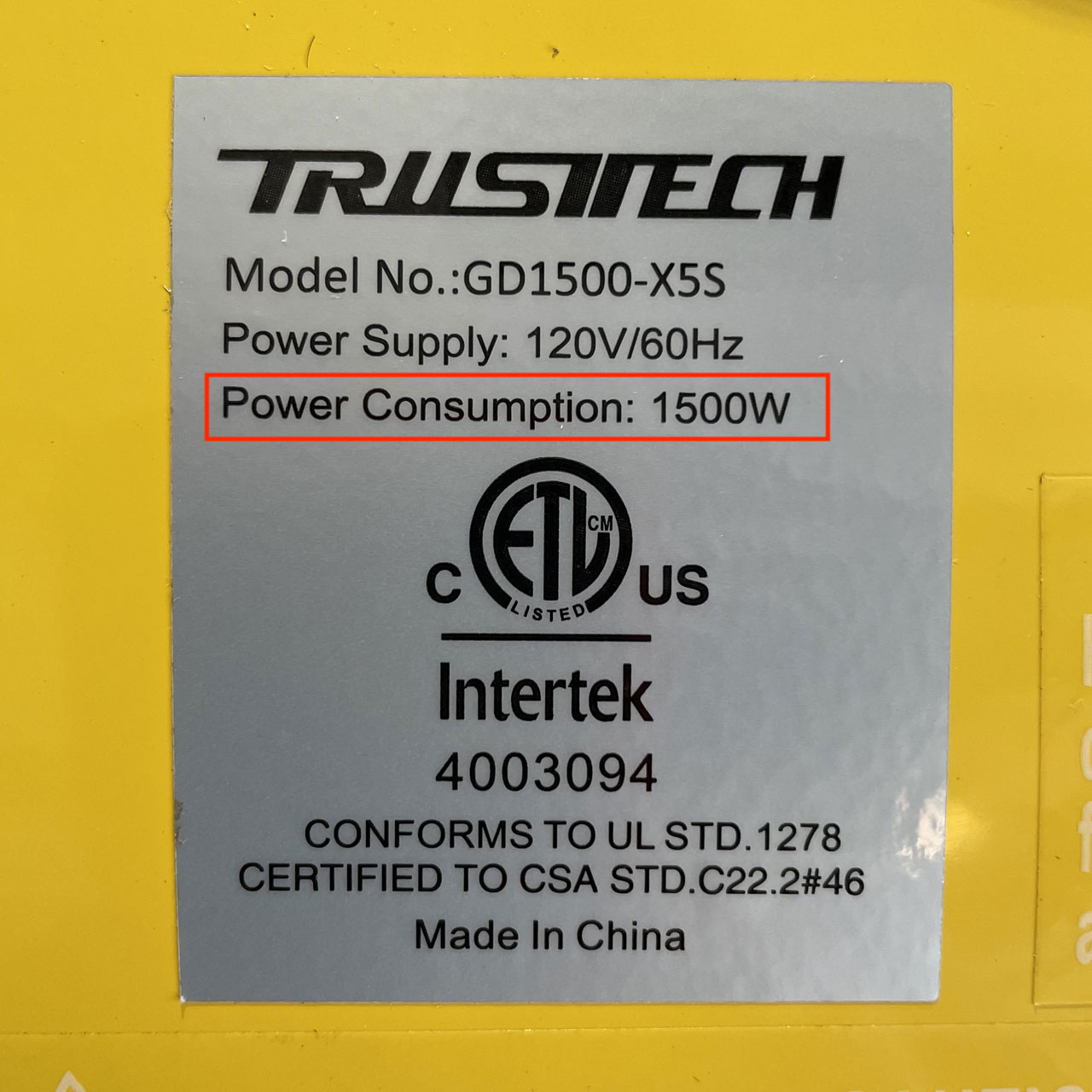
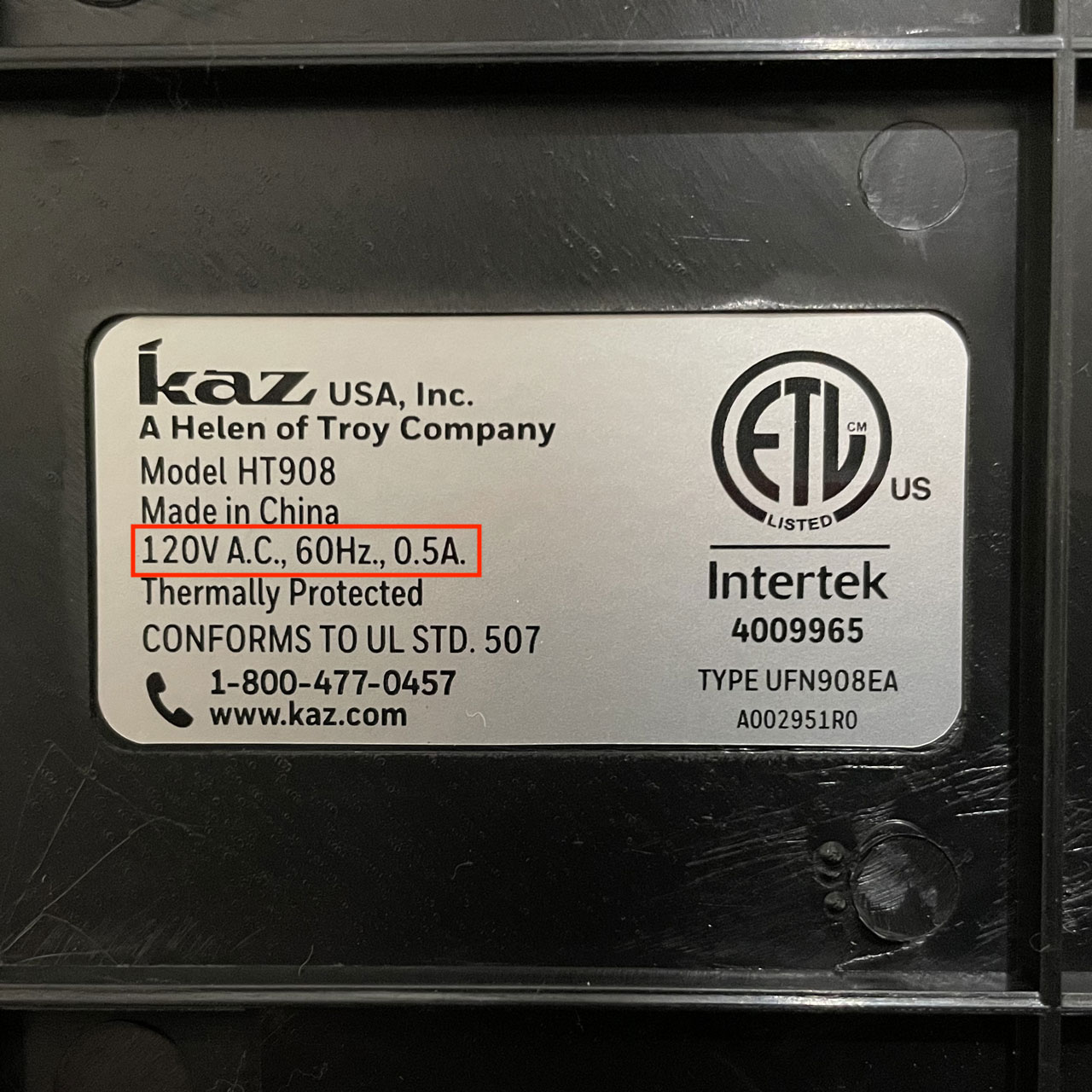
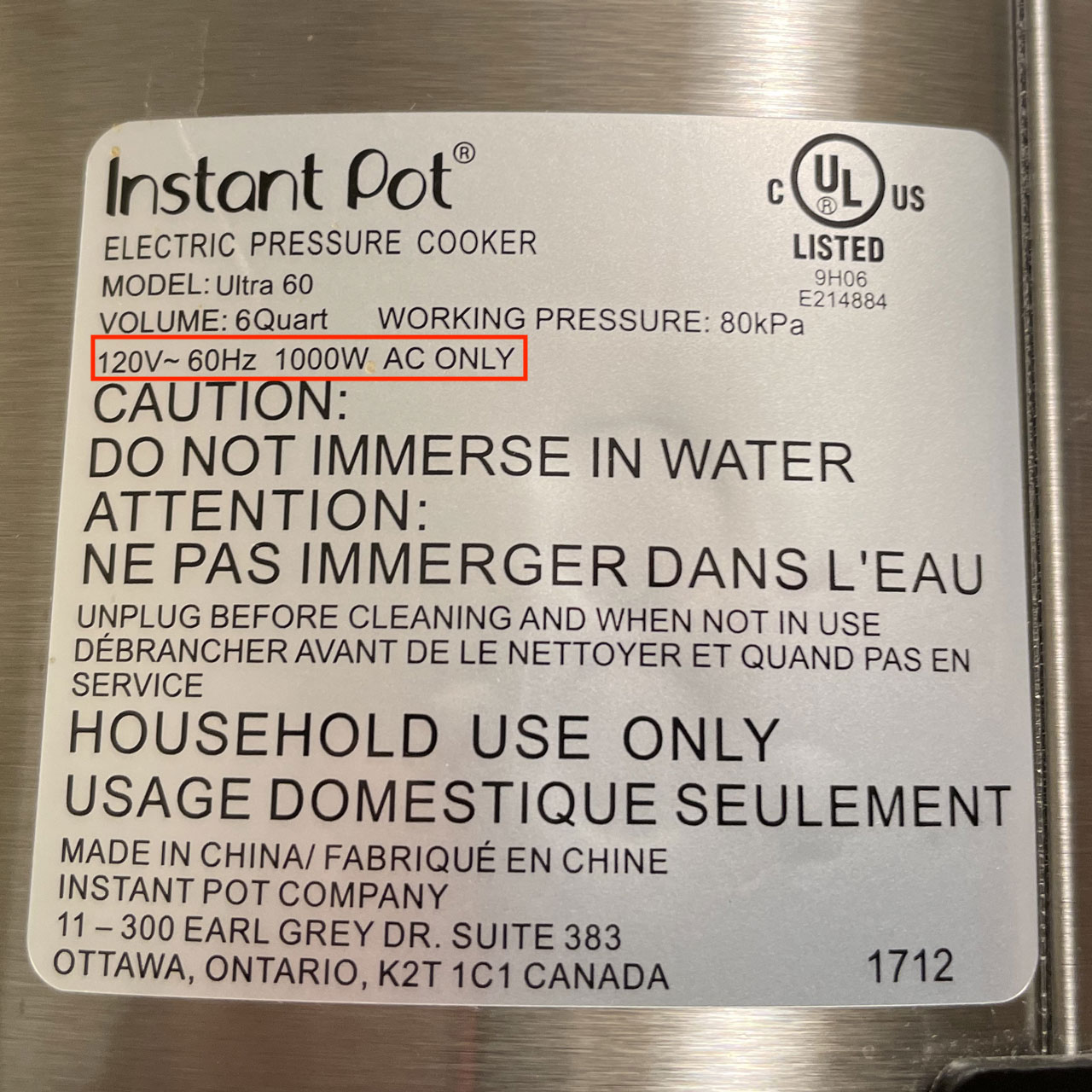
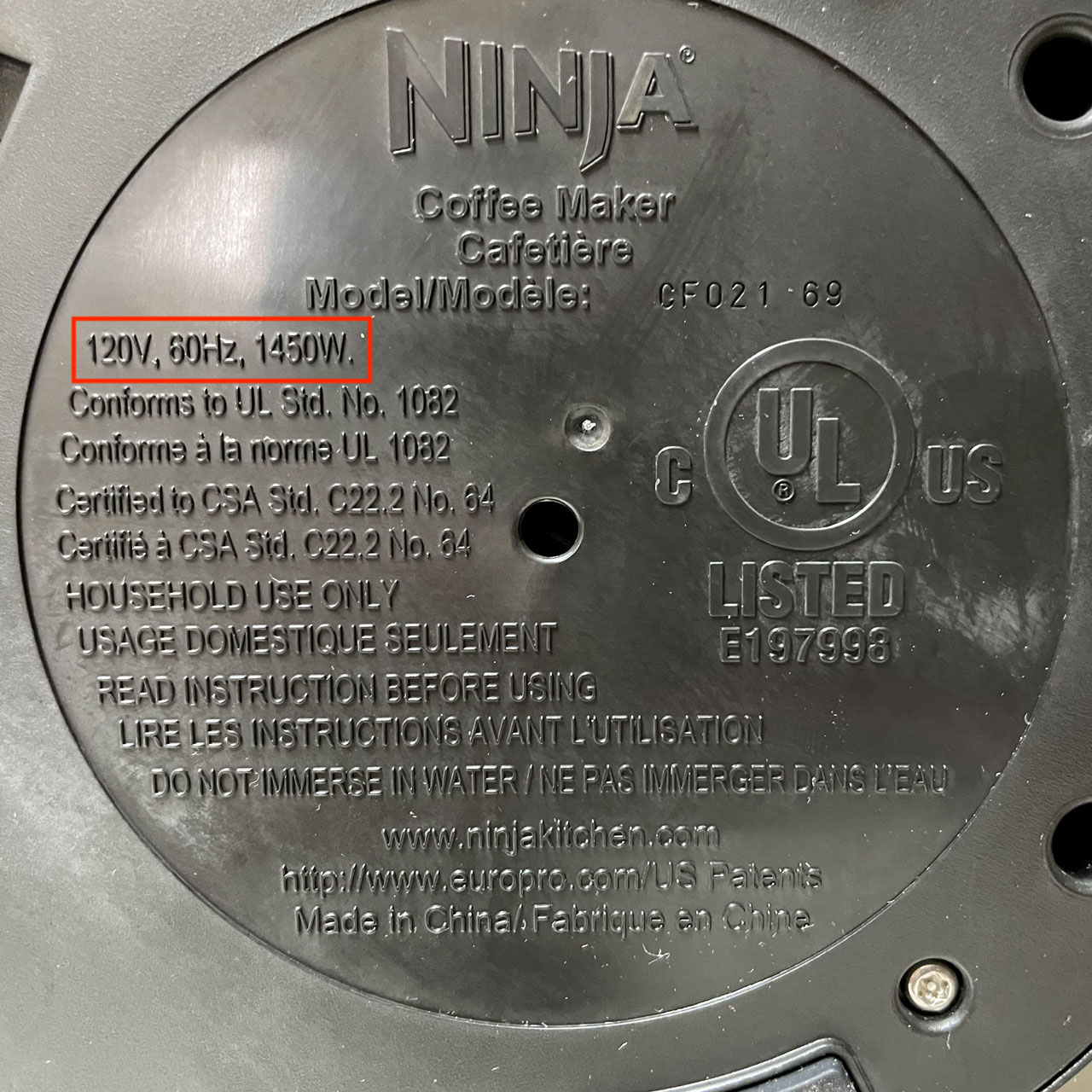
Let’s do the math
The Space Heater above consumes 1500W (per hour).
1500W / 120V = 12.5A This heater would use 12.5A of electricity if it ran continuously for 1 hour.
As mentioned, the typical RV Inverter runs about 80% efficiently. So running the space heater through your inverter would use 15A of electricity if ran continuously for 1 hour (12.5A*1.2 = 15A).
If you have a single standard RV Deep Cycle Battery, it’s likely a 63Ah lead-acid battery. A lead-acid battery can only be drained to 50% (~12.2V) giving you ~31Ah of usable battery.
How long will my battery last?
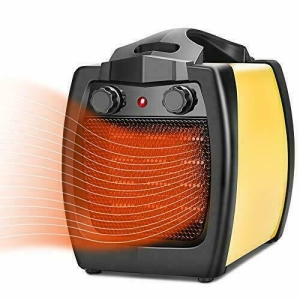 Running this space heater continuously would drain your battery in about 2 hours! (31Ah / 15A = 2.1 hours).
If your heater runs 1/2 the time because it automatically turns off when it reaches a set temperature, then you have roughly 4 hours before you need to charge your battery; PROVIDED you have absolutely nothing else using the battery in the RV (and there always is something else running).
The maths is ALWAYS the same. It’s called “The Power Formula” (sometimes referred to as Watts Law or the incorrect Ohms Law): A * V = W
Every electronic device states on the “label” the watts consumed. And HEAT is the worst!
BTW: a typical RV squirrel-cage propane heater consumes 5-7 amps. Some of the newer RVs are more efficient and can be as low as 3-4 amps. But let’s assume, 6 amps DC (no overhead from the inverter) and a full Furnace will run about 20 minutes/hour, so one-third the time – giving you a little over 15 hours of runtime before charging.
Disclaimer: All right, guys, here's the proverbial disclaimer! I'd like to make it perfectly clear that I am not an electrical or electronic professional. That said, after working with electricity for the past 40 years, I believe I have a reasonable amount of technical knowledge needed to build simple electrical and electronic systems and components for my own use. I created Learning Solar Basics to teach people, whether right or wrong, how I have designed and built my projects. The information in my videos and on my website is strictly for informational purposes only, and if you are unsure or uncomfortable in any way, simply hire a professional. Read the full disclaimer.



So what about when plugged into shore power? If the RV’s converter is working properly, will running a space heater still drain the battery, or will the charging from the shore source keep pace with drain?
No, not at all. If your RV’s converter is functioning properly, it will provide all the 12v power needed when plugged into shore power.